I wanted to share a little bit of my reasoning for starting the Azure DevOps Podcast. The above video is about 4 minutes long. Please take a look. Feel free to play at double speed. The gist of it is I like seeing developers having fun. Busted releases are not fun. All-weekend deployments are not fun. New things breaking when you make a code change are not fun. And software development can be SO MUCH FUN! I’ve spent 21 years so far as a professional programmer – not counting the toy apps and websites outside that time. I still love it, and I would like to share that joy with anyone I can.
Welcome to the 4th episode of theAzure DevOps podcast! Today, Jeffrey Palermo is joined by special guest, Steven Murawski. Steven is the Lead Cloud Ops Advocate at Microsoft and leads the Cloud Ops Advocacy team focused on DevOps SRE and Cloud Native scenarios with Azure. He is an active member of the Chef and WinOps communities and a maintainer for several open source projects including Chef, Habitat, and Test-Kitchen. Steve focuses specifically on infrastructure within Azure DevOps.
This episode, Steven Murawski explains the basics of infrastructure, which tools and infrastructures he recommends for those putting together their DevOps tool belt, the value in defining your infrastructure as code, where to get started and how to modify your infrastructure on the fly, and how to minimize your opportunities for failure.
Topics of Discussion:
[:51] About today’s topic and guest.
[1:31] What is Steve currently up to in regards to work?
[4:49] The basics of infrastructure.
[8:11] As people are putting together their DevOps tool belt, which tools and infrastructures does Steve recommend for the Microsoft shops?
[9:21] Steve explains what Terraform is and what you can do with it.
[11:35] How Steve sees the value in defining their infrastructure as code.
[13:31] Where to get started in this “infrastructure as code” world (and modifying your infrastructure on the fly.)
[18:07] A word from Azure DevOps sponsor: Clear Measure.
[18:33] Steve speaks about tweaking infrastructure, minimizing opportunities for failure, and applying testing principles to the infrastructure’s code.
[20:00] What format do these tests live in and where are they running from?
[23:55] At what level of granularity do you break up the ARM files?
[28:45] Once an application has been running for a while, what does the path look like to change something that’s already there when you don’t want to start completely fresh?
[31:20] When do you release a new build?
[33:47] Do you push a new release through the release part of the Pipelines with an existing build?
[36:55] Steve speaks about the Chef and WinOps communities he is a part of, as well as the open source projects he helps maintain.
[44:41] Where to get started with infrastructure as code.
This episode, Jeffrey Palermo welcomes his guest Sam Guckenheimer, to the podcast! Sam is the Product Owner for the Azure DevOps product line at Microsoft, and has been with the Microsoft team for the last 15 years. He has 30 years of experience as an architect, developer, tester, product Manager, project manager, and general manager in the software industry worldwide. His first book,Software Engineering with Microsoft Visual Studio Team System, was translated into 7 languages and recognized as a de facto guide for teams adopting Agile practices. He’s also a frequent speaker at industry conferences.
Sam explains the exciting new offer around Azure Pipelines for open source teams, changes he has seen in the industry from his many years of working at Microsoft, and some of the biggest changes in how users work with Azure DevOps. He also provides tons of key insights into the findings and research around predicting the impact Microsoft’s changes will make on user interactions, good practices around gathering live site telemetry and data collection, architectural (or design decisions or patterns) that help or hurt the live site supportability of a complex system, and key takeaways from his own internal learnings and the State of DevOps Report.
Welcome to the second episode of The Azure DevOps Podcast — with your host, Jeffrey Palermo. Jeffrey is joined by his guest, Donovan Brown, to discuss how to use Azure DevOps services. Donovan is a Principle DevOps Manager at Microsoft, helping developers do great things with DevOps methods on the Microsoft platform. He has been with Microsoft since December of 2013, and has been a developer for 20 years.
This episode, Jeffrey and Donovan talk about the whirlwind it’s been since the launch of the new Azure DevOps, key information new developers might want to know when beginning to use or incorporate Azure DevOps, some of the changes to their services, what’s available for packages in DevOps, the free build capabilities Microsoft is giving to open source projects, some of the new capabilities around GitHub integration, and more!
Topics of Discussion:
[:52] About today’s topic and guest.
[1:02] Jeffrey welcomes Donovan to the podcast and he speaks about the name change and what it’s been like since the launch.
[4:25] Donovan shares his background in developing and his day-to-day duties at Microsoft.
[11:47] How the Team Foundation System has morphed through the phases to Azure DevOps.
[14:59] The key things new developers need to put into the various pieces (the continuous integration build, the deployment, etc)? What concepts should they think of?
[19:27] Donovan explains some of the changes to Azure DevOps services that allow you to pick and choose what you want to use.
[21:08] A word from Azure DevOps sponsor: Clear Measure.
[21:37] Donovan talks about some of the new capabilities around GitHub integration.
[24:00] What is YAML?
[27:44] How developers manage YAML.
[29:10] Donovan speaks about what’s available for Packages in DevOps.
[34:22] About the new open source pipeline listing.
[36:20] About the free build capabilities Microsoft is giving to open source projects.
[37:00] What Jeffrey and Donovan love about the free availability of Azure DevOps for open source projects.
[38:58] Donovan explains the concept of an unbreakable pipeline, its capabilities, and what makes it so exciting.
[43:30] Donovan’s suggestion for listeners to go do after listening to this week’s episode.
Welcome to the first edition of The Azure DevOps Podcast! Your host, Jeffrey Palermo is joined by guest, Buck Hodges, to announce the global release of Azure DevOps Services. Buck is the Director of Engineering for the Azure DevOps product group and has been at Microsoft for over 15 years.
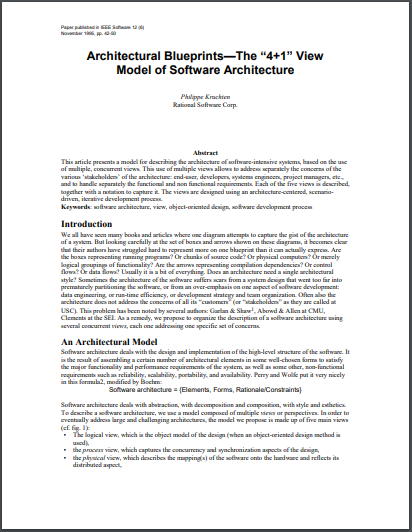
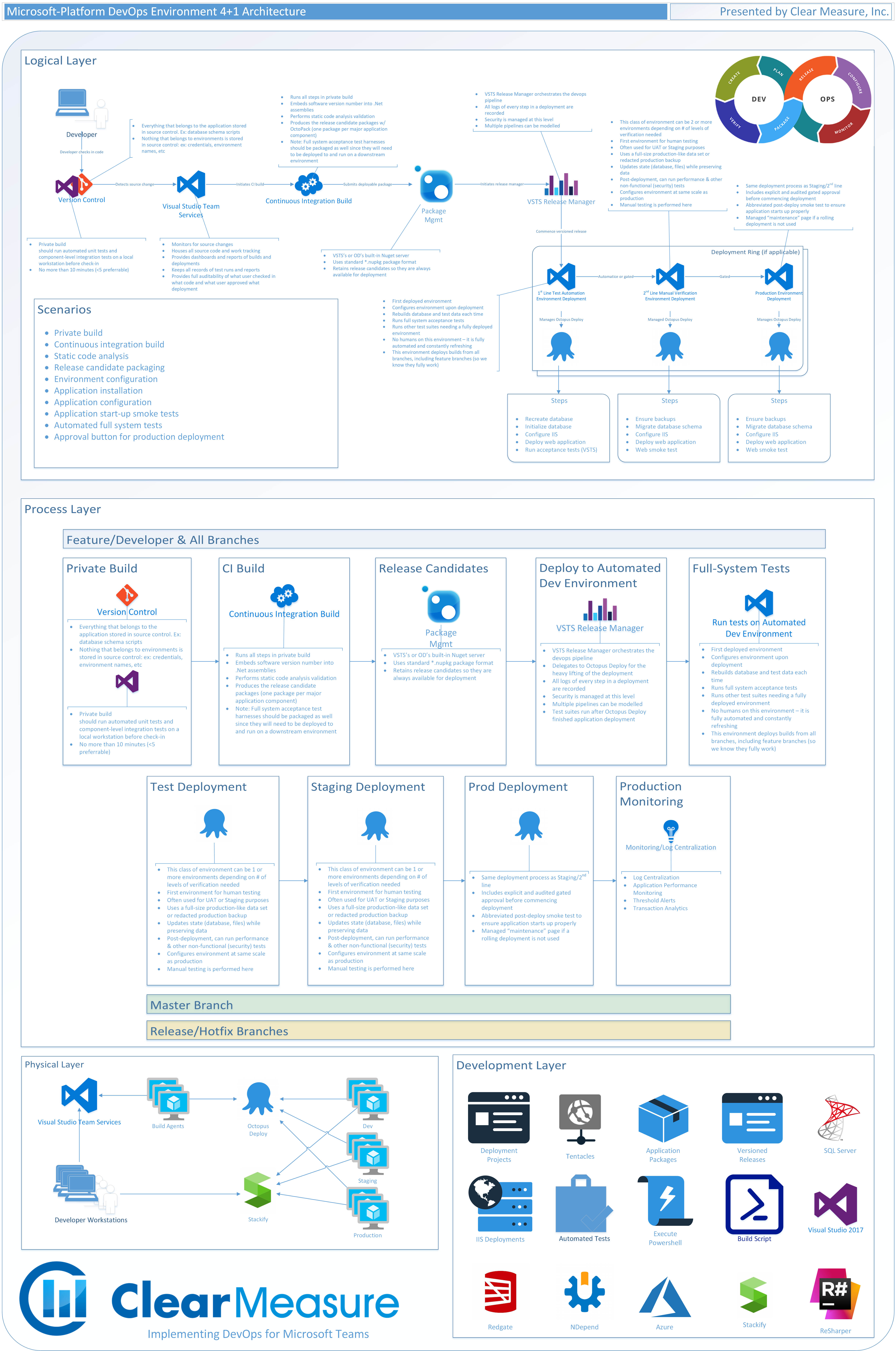
You may just be learning about the iterative, emergent architecture method known as “4+1”. You can read the original paper here. Written by Philippe Kruchten in 1995, this 15-page paper lays out the views that are needed in order to communicate the architectural elements of a software system. Coursera has a good summary video in their course catalog here.
Architects in other professions go through similar thought processes as software architects, so it can be useful to borrow the graphical outputs that these other architects generate as illustrations of the decisions made while finding a solution suitable to the problem.
Continuous Delivery is an umbrella terms used to describe the process for an automated system that takes changes to the source and configuration of a system and flows those changes through a process and ultimately to a running production system while catching quality issues. Jez Humble maintains a very useful site dedicated to continuous delivery here.
I recently presented a sample 4+1 architecture to the Cloud Austin user group. Since I received several requests for the diagram, I’m posting it here. If you have any additional questions, contact me. I’m always happy to help. Additionally, I have a high-resolution PDF of this diagram (ARCH D in size, if you would like to print it on a plotter).